

Standing on the rim at Grand Canyon West can feel like looking at a masterpiece in a frame. The views are wide, clean, and dramatic, and they invite you to pause.
Then you drop to the Colorado River, and the Canyon stops being a picture. It becomes the weather, sound, motion, and scale that you feel in your chest. Rafting turns the Grand Canyon into a place you move through, not just a place you look at.
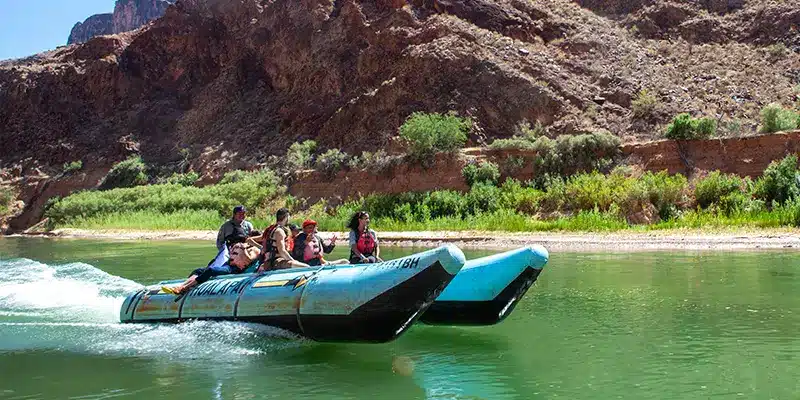 That shift, from overlook to immersion, is why Colorado River rafting belongs near the top of a Grand Canyon West plan, whether you are traveling with family, chasing a serious adrenaline day, or simply craving a deeper relationship with the landscape.
The Canyon Looks Different From River Level
From above, the Canyon reads as distance and depth. From the water, it reads as walls, bends, and layers that slide past you. The river corridor wraps you in geology, with rock faces rising thousands of feet overhead and shadows that change by the minute as the sun tracks across the rim.
River level also changes your sense of proportion. A beach that looks like a thin ribbon from a viewpoint becomes a real place to step onto. A side canyon that barely registers from the rim becomes an entrance into cool shade, dripping springs, and polished stone.
The experience is active, too. You are listening for rapids, watching the water texture, scanning ledges for wildlife, and tracking the current as it carries you into the next turn.
Why Grand Canyon West Makes Rafting Unusually Doable
Many people assume that rafting the Colorado River requires a multi-day commitment, complex permits, and long drives to distant launch points. Grand Canyon West offers a different path.
On this stretch of river, the access is direct enough to make a one-day rafting experience realistic for travelers who are also fitting in rim activities. The put-in is reached via ينابيع الخوخ, with travel that includes historic Route 66, and tours typically start early to stay ahead of the hottest part of the day.
After you have the big picture from the rim, rafting is the step that puts you inside the picture.
A few practical details make the day feel approachable once you know what to expect:
- Transport: Outfitter-provided shuttles handle the to-and-from logistics, so your day is not built around car moves.
- Age range: Many trips welcome guests ages 8 and up, with Coast Guard approved life vests and other essential gear provided.
- Route access: This corridor includes the only direct road access for one-day rafting on this stretch of the Colorado River.
- Return options: Some itineraries offer a helicopter return, which can turn the exit into a scenic lift back toward Grand Canyon West.
That combination, rim access plus river access, is rare in a place this vast.
Whitewater That Feels Earned, Then Calm That Feels Spacious
The river day is not just a string of rapids. The rhythm matters.
On many one-day motorized trips, you get lively whitewater early on, often in the Class II to III range, where waves slap the raft, the boat pivots with purpose, and everyone gets loud in the best way. It is enough intensity to feel proud of yourself, without demanding technical paddling skills from first timers.
Later, the river settles into longer calm stretches that invite you to look up and out. The Canyon opens, the walls broaden, and the pace gives guides room to interpret what you are seeing: rock layers, water lines, side canyons, and the small green signatures of life that cling to the edges.
That mix is the secret. You get a morning that wakes up your senses, and an afternoon that gives them room to expand.
A Living Cultural Context on the Water
Rafting at Grand Canyon West is tied to the people who have known this place as home across countless generations. هوالاباي ريفر رانرز is tribally owned, and many guides are هوالاباي or from neighboring tribes, offering an authentic, firsthand perspective that feels genuine and engaging, rather than rehearsed or scripted.
The Colorado River is sacred in Hualapai tradition, called Ha’yiđađa, often translated as “backbone.” On the river, cultural stories sit naturally alongside geology and history, because the place itself does not separate them.
You may hear stories that are embedded in the canyon corridor, including exploration history and more recent attempts to reshape the river through dam proposals. You may also learn what certain landmarks mean to families who still live near the river’s edge.
A few of the moments people tend to remember include:
- Creation stories shared in the quiet water.
- Historic sites pointed out along the canyon walls.
- Cultural context for the river as a living presence.
- The feeling of being welcomed into a story that started long before your visit.
This interpretive layer changes the tone of the day. It becomes more than thrills. It becomes a connection.
Signature Stops and Scenes You Cannot Get From the Rim
Rim viewpoints are spectacular, yet they naturally select what they show: wide panoramas and dramatic drop-offs. The river selects different details.
One of the signature highlights on many trips is a stop for a short hike to Travertine Cavern Falls, a waterfall grotto experience that can feel almost unreal after hours of sun and rock. It is a reminder that water shapes the Canyon in more ways than rapids.
The corridor also carries its own landmarks and surprises. Depending on conditions and the day’s route, you might pass places connected to historic expeditions and see evidence of past construction efforts along the river. And when the light is right, the rock color is not just “red” or “tan.” It is a layered palette that shifts from warm sandstone tones to dark ancient basement rock.
Wildlife sightings are never guaranteed, yet the river’s environment gives you a better shot than the rim at spotting life that blends into the landscape. Bighorn sheep on ledges, birds of prey circling high, lizards sunning near the waterline, and tracks in the sand can all be part of the day.
Picking the Right Trip Style
The best rafting choice depends on how you want the day to feel: efficient and high-energy, or capped with a dramatic aerial exit.
Currently, most visitors are choosing between a one-day motorized rafting trip and the option to add a helicopter return. The helicopter exit appeals to travelers who want to save time on the return route, while turning the exit into a highlight.
Here is a simple way to compare the available formats. Exact itineraries and pricing vary by season and operator, so it’s smart to check current details when you book.
| Trip Format | Time Commitment | Raft Style | Overnight | Best Fit For | Typical Vibe |
| One-Day River Trip | One full day | Motorized pontoon raft | No | Families, first-timers, tight schedules | Fast access, big mileage, balanced rapids and sightseeing |
| One-Day Plus Helicopter Return | One full day | Motorized pontoon raft | No | Visitors stacking river plus rim activities | River immersion with a dramatic return |
If you are unsure if you want to stay longer, a one-day trip is a strong first choice. It delivers real river sensation without requiring you to commit to camping logistics.
What To Pack and How To Show up Ready
Outfitters typically provide key safety gear, often including life jackets, rain gear, and a dry bag for personal items. Even so, your comfort on the water depends on how you prepare for the sun, spray, and temperature swings between early morning and afternoon.
A good rule is to dress to get wet, then protect yourself from the sun once you dry.
Here are practical items that tend to matter most:
- Footwear: Closed-toe water-ready shoes with grip, not flip-flops.
- Sun protection: High-SPF sunscreen, sunglasses with a retainer strap, and a brimmed hat.
- Clothing: Quick-dry layers and a light insulating layer, if the morning starts cool.
- Hydration: Drink early and often, even when the air feels dry and mild.
- Personal items: Minimal valuables, with phone and keys secured in the provided dry bag.
Also plan for a little movement on uneven ground during stops. The hikes are usually short, yet canyon surfaces can be sandy, rocky, and sun warmed.
Pairing Rafting With Grand Canyon West Highlights
Grand Canyon West is known for our rim experiences, and rafting does not replace them. It rounds them out.
A rim visit gives you orientation. You get to see the broad structure of the Canyon, trace the river from above, and grasp the distance your raft will cover. Then, rafting gives you the counterpoint: the texture of the place, the sound of the water, and the way the Canyon closes around you as you move downstream.
Many travelers build their itinerary around this contrast. A common approach is to plan rafting as the anchor experience, then fit in rim stops either before or after, depending on tour timing. If you choose a helicopter return option, you can sometimes keep more daylight for rim viewpoints.
This pairing works because each viewpoint asks a different question.
The rim asks, “How big is this place?”
The river asks, “What does this place feel like?”
Timing, Weather, and the River’s Mood
The Colorado River does not offer the same day twice. The season, recent rainfall, and river flow all influence how the Canyon presents itself.
Summer can bring intense heat and, at times, monsoon storms that transform side drainage into temporary waterfalls. Those conditions can be exhilarating, and they can also be demanding, which is why early departures and good gear matter. Spring and fall often bring more moderate temperatures that many people find ideal for long hours outdoors. Winter can mean cold water and fewer departures, yet it can also deliver a quieter canyon atmosphere when trips run.
One more real-world note: access roads in canyon country can be affected by storms and flooding. The best plans keep a little flexibility and treat the river as the priority when conditions shift.
Rafting at Grand Canyon West is not just a way to add excitement to a visit. It is a way to trade certainty for presence, and to let the Canyon speak at river volume, not postcard volume. When you step off the raft at the end of the day, the rim no longer feels like the whole story. It feels like it’s the beginning.